Peptide Quality Assurance & Purity Testing Boc Scientific Researches

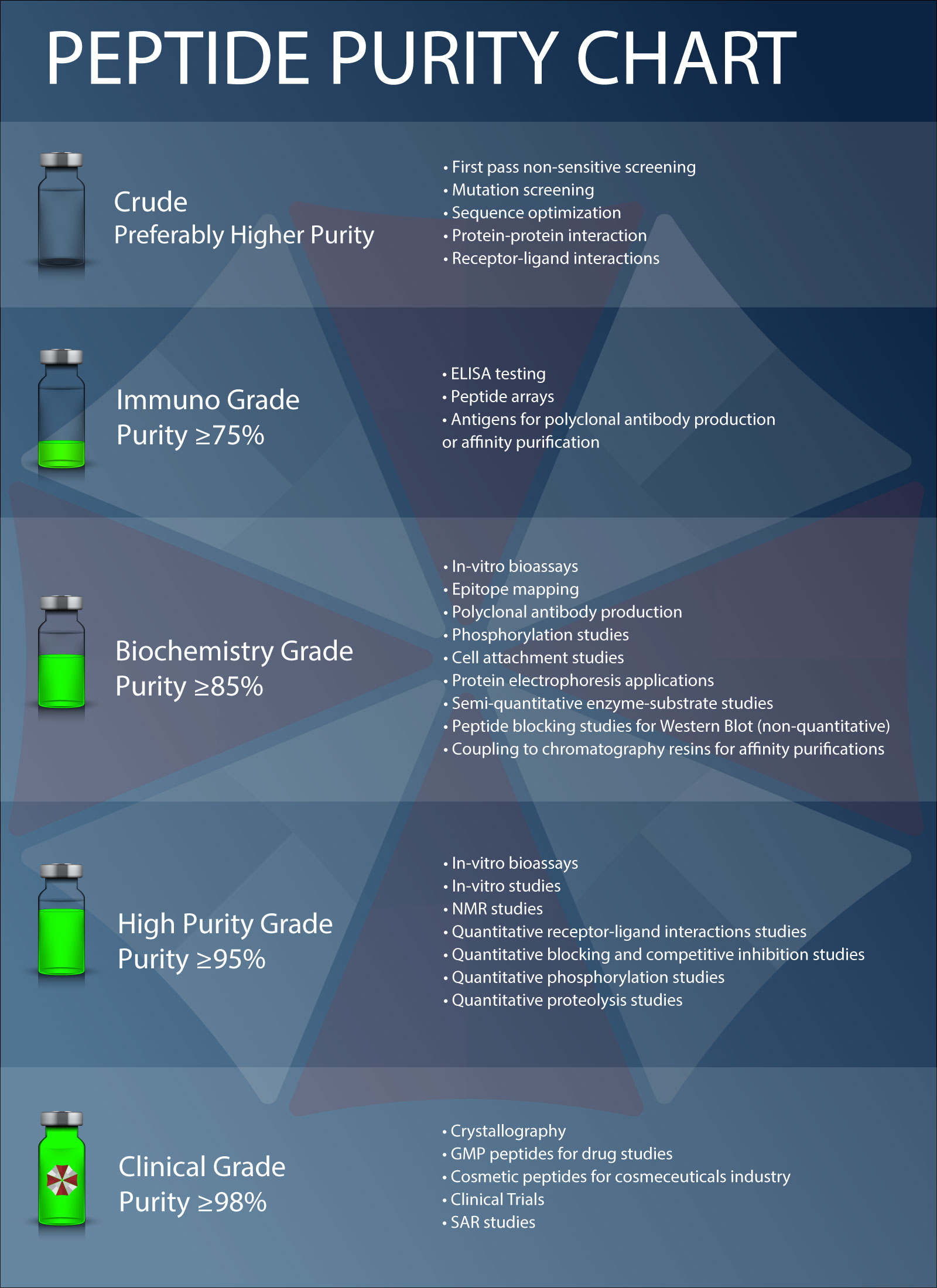
Peptide Pureness Determination Creative Peptides-peptide Medication Exploration Research-grade peptides are produced research laboratory study use just-- they are not produced under pharmaceutical GMP criteria and are not implied for usage as therapeutics or in humans. These peptides feature a basic quality assurance plan, generally consisting of HPLC purity evaluation and MS confirmation of identification, ensuring they meet scientific standards for purity and structure. They are labeled "for research study usage just" to make clear Cellular Research that they are planned for in vitro experiments or pet research studies, not for any kind of kind of human usage. Yet peptide pureness is perhaps the solitary crucial top quality statistics for any research peptide. It directly impacts the reliability and reproducibility of speculative results. A peptide noted at 75% pureness and one at 99% purity aren't just different grades-- they can create meaningfully different end results in the very same assay.
What machine is utilized to examine peptide purity?
Peptide purity is regularly identified by HPLC (high performance fluid chromatography). This technique allows splitting up and family member metrology of each peptide synthesized. If coupled to a mass spectrometer (MS), this gives molecular mass/ identification information of the target peptide and coming with impurities.
How To Send Samples For Screening
When examining peptide top quality, lots of people concentrate on purity (HPLC) and identification (mass spec). Those validate you have the proper particle and that it's relatively clean from peptide-related results. High-Performance Liquid Chromatography (HPLC) is the common approach for evaluating peptide purity.- This is because HPLC only records peptide associated web content, and consequently the 1% recurring is made up only of peptide-related impurities.
- A purity portion without a chromatogram is medically inadequate.
- Some third event laboratories offer the outcomes of the assay as a binary pass/fail.